
You Belong: You're In The Will
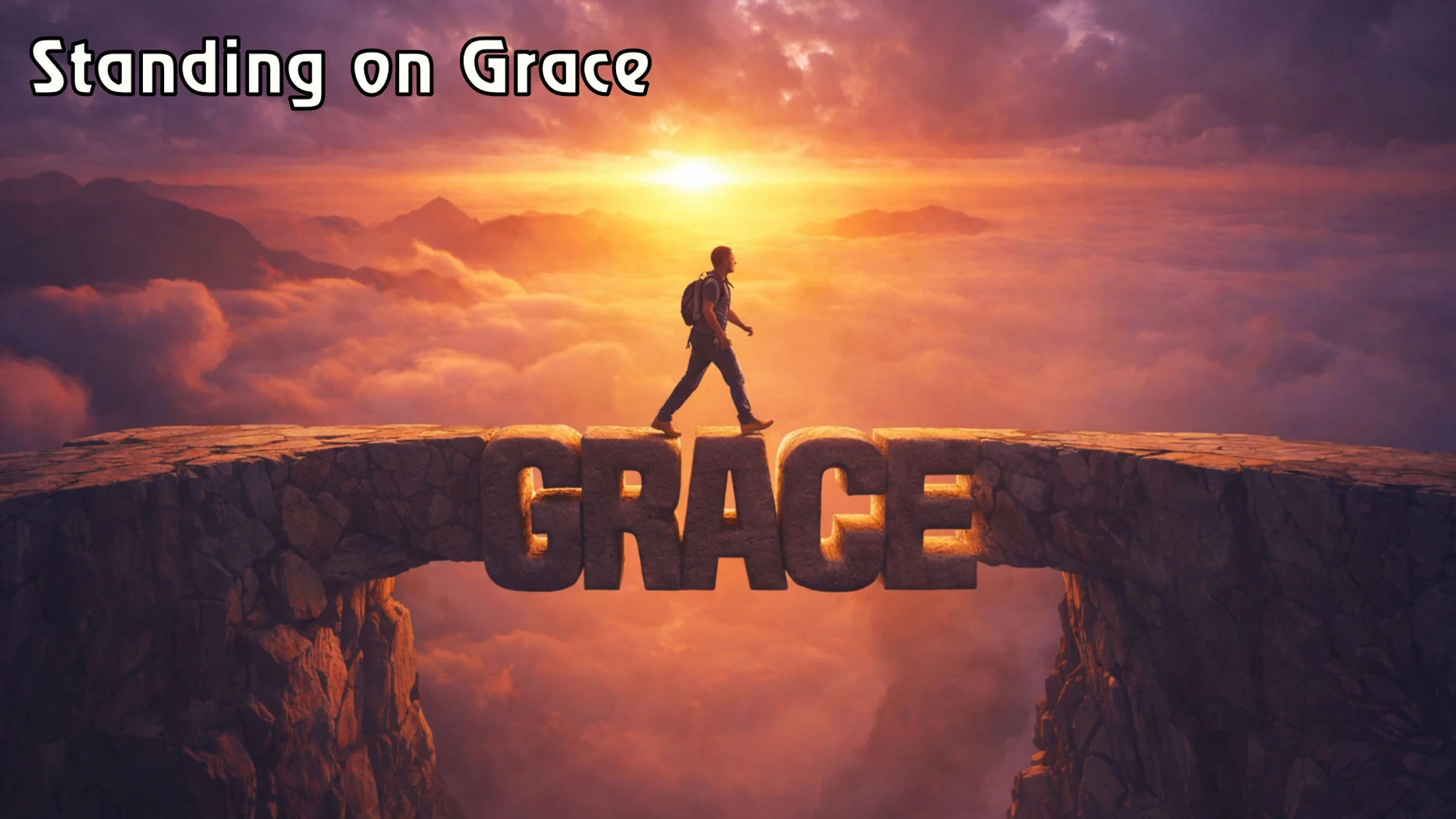
In Galatians 4, Paul writes that the gospel is more than freedom from sin-it is an invitation to join God's family. Through the Spirit of God's Son, we no longer relate to God as fearful slaves but cry out with confidence, "Abba, Father." This week we'll learn how adoption reshapes our identity, secures our belonging, and calls us to live through a grace-filled relationship.
Handout | PowerPoint | Transcript
Good morning, everybody. I'm so grateful for all the great storytellers we have. All right, let's pray. Lord, as we continue our our series on Standing on Grace, as we turn to Galatians 4, where we talk about, you belong. You're in the will. Lead and guide us in Jesus name. Amen.
Maybe parents, have you ever promised your children we're going to go on a trip? And maybe you don't tell them where you're going. You're going to keep it suspenseful, give them anticipation, anxiety, and you get in the car, you drive, and maybe it's a, for us, a relatively quick trip to Disneyland. Okay. Or maybe something even bigger, like going camping or going to the Grand Canyon or Yosemite, something that requires them to sit in a car and wait. And kids are fortunate because when we were growing up, there was no iPad, no iPhone to entertain us. You know what we did? We looked outside the windows. We tried to find games that we could play.
So, you tell them we're going to a very special place. And they know. They're looking forward to it. But then the inevitable question will come up. Are we there yet? Right. You know where you're going. You know what the great prize is at the end of the trip. It's maybe something that you've been planning and anticipating for some time. But the kids, they don't see the big picture. They just know they're going somewhere wonderful. They're family, they're heirs, they're part of the family. To be able to go and experience this wonderful, great gift, this wonderful, great trip, whatever it may be.
I'd like to go to Book of Galatians, and we are going to go into chapter 4. But actually, I want to. I want to start a couple of verses beforehand just to kind of remind us of where we're at. Okay, so let's go to Galatians 3, actually. And I want to go to verse 23, Galatians 3, verse 23. Are we all there? Okay, so just as a reminder, verse 23 of Galatians 3, Before the coming of this faith, we were held in custody under the law, locked up until the faith that was to come and would be revealed. So the law was our guardian until Christ came, that we might be justified by faith. Now that this faith has come, we are no longer under a guardian. So in Christ Jesus, you are all children. You are all children of God through faith. For all of you who are baptized into Christ have clothed yourselves with Christ. There is neither Jew nor Gentile, neither slave nor free, nor Is there male and female for. For all are one in Christ Jesus. If you belong to Christ, then we are Abraham's seed and heirs according to the promise.
And I love this passage because it points out the fact that we're imperfect. The guardian, the law was, in a sense, a guardian, but we're imperfect and we could not fulfill the law because, again, we're sinners.
Somebody once wrote, I don't know who it's who it is, but they. Galatians 4. As we head into now, it teaches that Christianity isn't moving from bad to good behavior, It's moving from slavery to sonship.
Paul talks about this as well in Romans, where he talks about how we're slaves to sin. And in our letter here to the Galatians, he reminds us that we were formerly slaves. We were under the guardianship of the law, but now Jesus has come into this world, we can become sons and daughters of God.
So it points out that the law served as a guardian, and a guardian is usually assigned to what, take care of a child. In the time that Paul was writing, just kind of a quick reminder, I mentioned this briefly last week, is that a father would sometimes place a guardian, for instance, over his son. And, and from a young age to an age that the father saw fit, where he would then inherit what his father would give him. He was simply an heir. He knew he would, for instance, inherit perhaps the home, maybe the land, maybe the family business, whatever it may be. And there was a guardian assigned to walk with, to help this child grow and to mature from a young age till maybe 16, 20. It was at the father's discretion.
But the idea of a guardian is not permanent, it's temporary. And Paul's also arguing, encouraging, that when you accept Christ, you are a part of the promise that was given to Abraham in Genesis 12. To be part of a family and to receive a promise.
All right, let's go now to Galatians 4, okay? Verse 1. Galatians 4, verse, 1. What I am saying now is that as long as an heir is underage, he is no different from a slave, although he owns the whole estate. Okay. He is no different from a slave, although he owns the whole estate. The heir is subject to guardians and trustees until the time set by his father. So also when we were underage, we were under slavery under the elemental spiritual forces of this world. But when the time set, time had fully come, God sent his son, born of a woman, born under the law, to redeem those who are under the law, that we might receive adoption to sonship.
So there's this one particular word that I want to focus on, is that we are redeemed, verse 5. To redeem those who were under the law. The Greek word for this word is exagorase. Everybody say that. One, two, three, exagorate. All right, you can speak Greek now.
And with it, it means to buy out, to buy away from ransom, or in the middle of a waste, to purchase out, to buy or redeem. And so we see here that in Galatians 4:5, Paul is using this, this word, this verb, to carry on a meaning of redemption through payment of a price, to recover from the power of another. Ultimately, we see Christ freeing and redeeming the people from the Mosaic Law at the price of his death. There's this idea of freedom and of liberation, but at the cost of who? Of Jesus.
And it's significant here because this is something, too, that I don't remember if I made this point last week. But you know what's beautiful about this? It's a reminder that Christ did not stay into heaven to fix this problem, but what came down to earth to be with God's people and to free us and save us from our sins. It wasn't something from a distance. Jesus stepped onto this world to be around the people that he loved so dearly.
And if we continue on. Verse six. I love how it says, because you are his sons, God sent the spirit of his son into our hearts. The spirit who calls out Abba, Father. Abba is the Aramaic term for Father, verse 7. So you are no longer a slave, but God's child. And since you are his child, God has also made you an heir.
Ultimately, you are adopted into the family of God and become an heir, meaning we all become brothers and sisters. God the Father as our Father. What does it mean to be adopted? You know, I go on YouTube, I'm guaranteed at least every couple of days to see a very wonderful, beautiful story of usually dogs, the dodo. I almost have to stop telling the algorithm to not send me these videos, because I'm going to cry every day and I'm just going to get emotionally attached to them and want to adopt all of the dogs in the world. Right? That's my heart. If I had a gazillion dollars, I would.
But I, recently, I've been coming across several videos of kids where they've been taken in some very unfortunate. There was a story, a couple stories of police officers who. They see these children in such horrible conditions, and they realize that they don't want to let that child go back into that horrible situation or be placed somewhere where you don't know who's going to take care of. So they take it upon themselves to personally adopt. I know there's one guy who, who adopted two young boys and it took several years, but they finally were able to be adopted and change their names to his name. There's a doctor that I believe. I think she's a doctor. In the last six months, I saw a story where she already had a number of kids. I think she already had four or five kids. But as she was. She was a surgeon and she was operating on this child. This child walked in by himself, knew he had to get surgery, somehow managed to get this surgery set in place. And as they're about to go and operate, he shares a story. And she realizes she can't let this child just walk back out. Come to find out it's not just him. He has several siblings. And so as they operate, takes care of what needs to be done. She goes to her husband and says, there's this child that I operated on. I feel compelled to adopt this child. And the husband is like, okay. I mean, we've already got kids of our own. So they started the adoption process. Come to find out, though, he has, I think he had three other siblings. She goes back to her husband. I don't feel right about just adopting this particular child. So her heart went out. Can we adopt this other child? And then they had family friends who also took in the other two kids. Gracious. Gracious love.
Being adopted, though, is also what happens, you know, when you're adopted. Your identity to some degree changes. Perhaps you have an emergency contact. It goes from guardian to parent. There's a little bit more of an emphasis of permanence. Who should we call, is what the school may say, call their parents. Identity and belonging. Something that a child who's waiting to be adopted is looking for what? Security. Permanence. Not just care. They want to go from a guardian to wanting to have a parent, somebody that they could go to and talk to.
As believers, do we have somebody that we can go to and talk to give our hearts, our cares, our fears, our joys, our wins too? Perhaps also in the process, when you don't have a permanent home, can you sleep well? Probably not. Because you're wondering, how long am I going to stay here before the A realize they can't take care of me or they want to send me back because I don't fit in. And yet when you're adopted, this is not something that's temporary. This is your home. I wonder what kind of sleep you would get when you don't have that anxiousness or constant fight or flight response, knowing somebody is there looking after them. Abba Father.
When you get adopted, you have the opportunity as well to change your last name. And this fits in so well with identity. Who are we a part of? What, what family? Part of tribe? I am, I belong to this family. When they perhaps go and start to play baseball or basketball, they can put that last name on the back of their jersey or maybe put it on their hat. This is who I am, this is my family.
And who we, who are we as believers? We're in Christ. What does that mean then for a family, a church family? We're all called by God, we all serve the Lord, and we all work together as a family to serve the Lord. Amen. So we have a new name and we become part of the body of Christ. We represent Jesus, just as you. If you put your name on the back of that jersey and that logo here, you're representing the team and you're also representing your family name. When you go out and play, maybe perhaps you've had your name on the back of your jersey and people know who your name is and maybe your conduct on the field was, it could have been a little bit better and your parents have to pull you aside and maybe have a conversation, hey, we don't act like that, okay? But a good parent will listen and will help the child to grow. Do you proudly wear your name and represent your family name?
When it comes to being adopted, there's also the opportunity potentially to have an inheritance. Once the adoption is finalized, there could be a will that automatically is transferred to you. It's not symbolic, it's guaranteed. There's no probationary period. Paul talks about this also in Romans 8.
But ultimately now the transformation of desiring to be adopted as a child. When you go into a home that has not been your home, what do you do? You wonder, is it okay if I can do this? Could I watch tv? Can I go make a sandwich in the kitchen? And so you have to ask for permission, Can I do this? Can I do that? Whereas when you know you are loved by God, when you are fully embraced and you are adopted, if you're hungry, you'll go to the kitchen and make yourself a sandwich.
Moms, dads, have you ever gone to the grocery store? And especially you got teenagers, you go to Costco and you get all the food or Vons or Ralph's or whatever, you go back and all your teenagers eat all the food. And then you gotta go back again to get more food, knowing that you're in safe, secure arms, a safe family can do wonders. Do we have the same safety and security in our Lord and Savior?
So it's not just a change, but it can also be an emotional change, a feeling of confidence. Who are we? Can I eat this? Some may have a place to go to and maybe think, do I stay here tomorrow or am I going to go home? Or is this my permanent home? I wonder too. You know, as individuals who adopt kids, I wonder what it's like when their adopted child finally calls them mom or dad. Especially when they've never had a child before. I'm sure it's one of those moments that they will never ever forget.
And in our community, as we follow Jesus, God becomes our Father. When we talk about things then beyond the community, maybe with your family and your neighbors, you become part of that community. Maybe when it comes to 4th of July, you have a barbecue, you shoot fireworks. Christmas and Easter and birthdays also become somewhat important because they recognize that these traditions are permanent, not maybe, not special occasions that may or may not disappear. You're part of the family.
Or perhaps when you walk into the house, when a child first knocks to come inside later, not only can they walk in, but they will have a key. An orphan will probably knock a little. Cautiously. If you're maybe a daughter or a son and you live there and you forgot your key, you might. Make sure to let you know, I'm home. Open the door. Children who are part of the family are not afraid to ask questions. And I guess again I want to correspond. Are you afraid to ask questions or seek answers from God? Maybe because you're scared of the answer. But I would encourage you seek confidently and there may be answers that you don't like. But does God want to lead us down about down a bad path? No. God truly desires the best for us. Children walk confidently. They're not afraid to ask questions or ask for something. So can we go to God with confidence and courage?
You know, sometimes maybe when you before the time of cell phones, maybe you had to remember numbers. But when you find your home, you don't have to remember those old numbers because they are no longer relevant. You can erase them now off your phone. You don't have to potentially have to hoard food because you could potentially be hungry. And if you're leaving, you don't know when your next meal will be or no longer having again to go to the fridge to ask for permission. There's a security. There's an assurance that we have when we are adopted and we are fully part of the family.
Tim Keller describes Abba as a confidence of love and assurance of welcome. Just as a young child simply assumes that a parent loves them and is there for them and never doubts the security of openness of daddy's strong arms, so Christians can have an overwhelming boldness and certainty that God loves them endlessly. Not just part time or just for a bit or as conditional. God loves them endlessly, forever.
Kenneth Barker also writes, the Spirit is the gift of God to all believers because they are sons and daughters.
Another beautiful gift that we're promised that as Jesus is preparing the disciples for his impending departure in the Last Supper in John, in John chapter 14, he says, and I will ask the Father, and He will give you another advocate to help you and to be with you forever. Not part time, but forever. The Spirit of truth, the world cannot accept him because it neither sees him nor knows him. But you know him, for he lives with you and will be in you. Verse 26 but the Advocate, the Holy Spirit, whom the Father will send in my name, will teach you all things and will remind you of everything I have said to you.
If you flip over a couple of chapters in John 16, verse 13, it says, but then when he, the Spirit of Truth comes, he will guide you into all truth. He will not speak on his own. He will speak only what he hears he and he will tell you what is yet to come.
So the beautiful promise. You know, as Adventists, we believe in the second coming of Jesus. And so until that day, even though Jesus is not here permanently, we have the Holy Spirit to lead and to guide us. We can't necessarily see, but we can experience that conviction in our hearts. The Holy Spirit is there also to shape and to mold and to guide us to be faithful followers of Jesus, to be faithful sons and daughters of God.
So I say all of this, brothers and sisters, you belong. You're in the will, okay? You belong. You are in the will.
And unfortunately, sometimes what has to happen. Well, generally what happens when a will is executed is that somebody has to die, right? But then you're then named as a beneficiary to receive something. There's nothing you have to do other than maybe perhaps you have to sign a paper of acknowledgement. And we simply acknowledge that Jesus Christ is our Savior and Somebody that we truly want to follow because Jesus has died for us. No taxes on this one, thank God. No restrictions. But I wonder, you know, for those of us who have accepted Jesus Christ, do we share that gratitude? And if so, do we do it often or do we focus on the challenges? My encouragement to you, brothers and sisters.
For those of you who are wondering, like, oh, I don't know about this God thing, I don't know about this Jesus thing. If you have questions, you want to learn more myself, we got people who would love to share that journey with you to know more about Jesus, but you're in the will.
Unfortunately. However, the will can also sometimes be contested by other alleged beneficiaries. I find it breaks my heart when I see people who think that they're not getting their fair share of what is supposed to come to them. Our will promise is a relationship with Jesus Christ and salvation. I would encourage us. Let's not try to, let's not try to argue with others and say, hey, you're not getting it right. You didn't fulfill the will, you didn't do this or that. Let's love. Love one another. And if somebody disagrees, shake and nod your head. Interesting. You don't have to agree with them, but you can still love them and pray for them. Even when they're vehement, when they think they're right, let's love with devotion. Let's not fight over. We can agree that Jesus is Lord and Jesus is our Savior.
No one can take God's love from you. Love one another and try not to be a stumbling block.
Reflection time. So this. I want you to reflect on this. Am I responding to God from fear or as a child loved by God? Do I have. Do I have safety and security in God? Do I approach God with fear or do I approach as a child loved by God?
This week, I want you to go with confidence, okay? Not because of what you have done. Remember, we're imperfect. Not because of what you've done, but because you belong. You are adopted, you are redeemed, and you are deeply loved by God. So may God be with you. Go with confidence. Not arrogance. Confidence, confidence. May you bask in God's love. Know you are adopted, redeemed. And one day, we hope soon we'll be reunited with our Savior, Jesus Christ.
Father in heaven, we long for the day that you will return. But until then, give us wisdom. Give us courage, Lord, if there's anybody here who's interested in learning more about you, give them the nudge to be able to speak with us because we want to share that journey with them, that they also perhaps might be able to want to join us here as in the church family. Help us to have courage, Give us opportunities to serve in Jesus name.
Everybody said amen, Grace and peace. Everyone.